

chasing ideal types
or "what happens before you gain perspective"

I am still cleaning the fridge. For my writing, it means revisiting old drafts, and keeping record of everything that pops into my head, in hopes that it will become enough of a thing, and it will be worthy of being thrown into this garbage bin.
Four days ago, I broke down sobbing at a yogurt shop, because of Phoebe Bridger's "Waiting Room." She wrote the song when she was 16; nowadays, she looks back on the desperation and rawness and wishes she could tell herself she would be okay. The song was written, nonetheless, and it brought me to tears. But it took less than a week for the things that I wrote that day, with teary eyes, to make me shiver with embarrassment.
[top comment on the video: “Sometimes I think to myself “how could a teenage girl write this song” then I realize that only a teenage girl could write this song”, user @Behshhaisown2973]
This is one of the perks of growing older—you haven’t only heard about the other side of things, you have been there before, you know firsthand that no feeling is final. People like me make it a point to squeeze everything out of the process, anyway. I used to think that the best use of past data was anticipating and preventing problems from happening at all, and that insisting on past mistakes was a skill issue. But that would only be true if being perfectly rational was the norm; as it often happens to ideal states, it is more of an exception. Or else, it is only one of the ways of going about life, handling problems and navigating challenges. After much deliberation, I have decided that I am no longer striving to become a robot.
I am suspicious of anyone that weaponises the logic of historical processes against people going through the present for the first and only time, ever1. I, too, used to believe that the recurring structure of revolutions and innovation should teach us how to navigate them, but the past only tells you that things happen. And they will happen again, but they are not the same, and each generation will have to figure out how to handle them. But we have been thoroughly convinced there is a way to bring the world under rational control—we just haven’t found it yet. In the meantime, people who stand to gain the most will call the inability to adapt and conform a skill issue, to shame you into just accepting the terms and conditions of the new world they are trying to create, at the technological frontier.
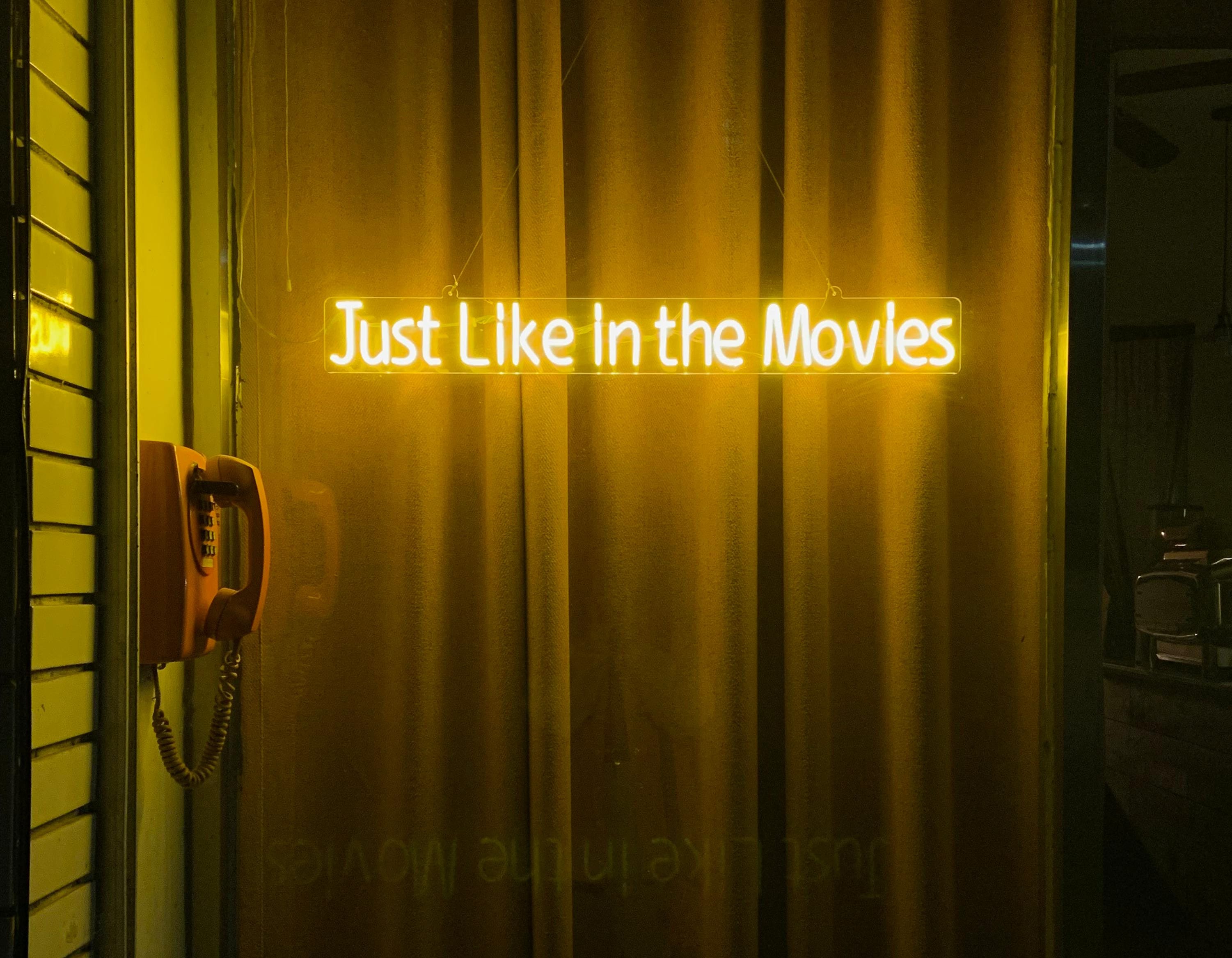
Once, in late 2023, I decided that I wanted to write about my illusions. The title was “just like in the movies,” in honour of the bright neon sign gracing the windows of this movie screening café in Daejeon, where I used to live. It looks particularly appealing at night, and no one who walks past it can resist the urge of taking a picture. The first time I saw it was on the way home of a memorable night out, the day I met someone, and it seemed like the start of something special. In the mental space where I keep my projections, I envisioned us becoming the kind of stuff people write scripts about.
Stories exist because we need to order the world as it stretches over time. Aspirations exist because we need it to be desirable. Illusions exist because reality often falls short of our desires. The ability to dream and the ability to fail and lose do not coexist peacefully.
I have been told off for making it too obvious that I believe in the stories in my head. It is in the way I talk about things, making every little event seem like a fateful design, every single part of it pointing towards the ending I envisioned. Once in a while, I run into people as delusional as me. It sounds more pathetic if you believe you know better about how the world works. People react more strongly when they don’t think the delusional other is good enough to get what they are dreaming of.
It doesn’t happen very often but, sometimes, I write a very good story in my head, and watch it come to life as events take place. People do exactly as I thought they would, consequences unravel just as predicted. Even when it’s the worst-case scenario, it brings a sense of accomplishment. When my movie started to go off script, the fatalistic part of my imagination was quick to articulate the most likely path towards the trainwreck. I wasn’t completely right (things were a bit worse than I expected), but I got pretty close. I am more skilled at devising how situations go wrong. In things that are only supposed to work out once (or very few times) such as job applications and romance, there are more missed shots than optimal moves. If you meet enough people, and read enough stories, you might succumb to the inconvenient truth of case studies—time is unlikely to serve you the same way it served others.
"My mantra is "the most valuable thing you can contribute to a conversation is your attention" and I forget it almost every time I talk to someone." (random user on YouTube @Fredreegz2)
I am trying to get used to the inescapability of the survival strategies that I dislike the most—seeing people as ideas, nurturing stereotypes, building expectations, comparing ourselves to others, feeling lonely and incomplete. Chasing ideal states belongs amongst these things that are productive with reservations. Expecting to eventually get rid of the ghost of comparison (for once and for all) can be just as useful, or useless, as reducing complicated things to general characteristics, for classification purposes. How much we do it, how much we believe in it, how often we switch gears and pursue a different strategy, might affect what we get out of it.
Accepting the inevitability and raising the concerns go hand in hand. You are still allowed to resist change, to dislike circumstances and to protest that reality falls short of your expectations. The consequences will be yours to bear. Many of our issues have answers we are not interested in entertaining, and the reason for our disinterest is far more worthy of any inquiry.
Before you gain perspective, make something out of your distress and sorrow. Write brokenhearted poems about parting with someone you will be glad to have left behind a few years (or weeks) later. Journal through the struggle, keep a detailed record of all the extreme things you have felt, before they fade away. Get comfortable with having feelings and experiencing reactions. Let the voice of insanity speak a bit, before reason wraps it up and stores it where you dare not touch it. The importance of things cannot be determined until you get far ahead, in retrospect, so keep going.
This refers to certain counter-responses to criticism of the Ghibli style transfer trend.
Found in the comments of “12 toxic things you do in conversations without realising.”